
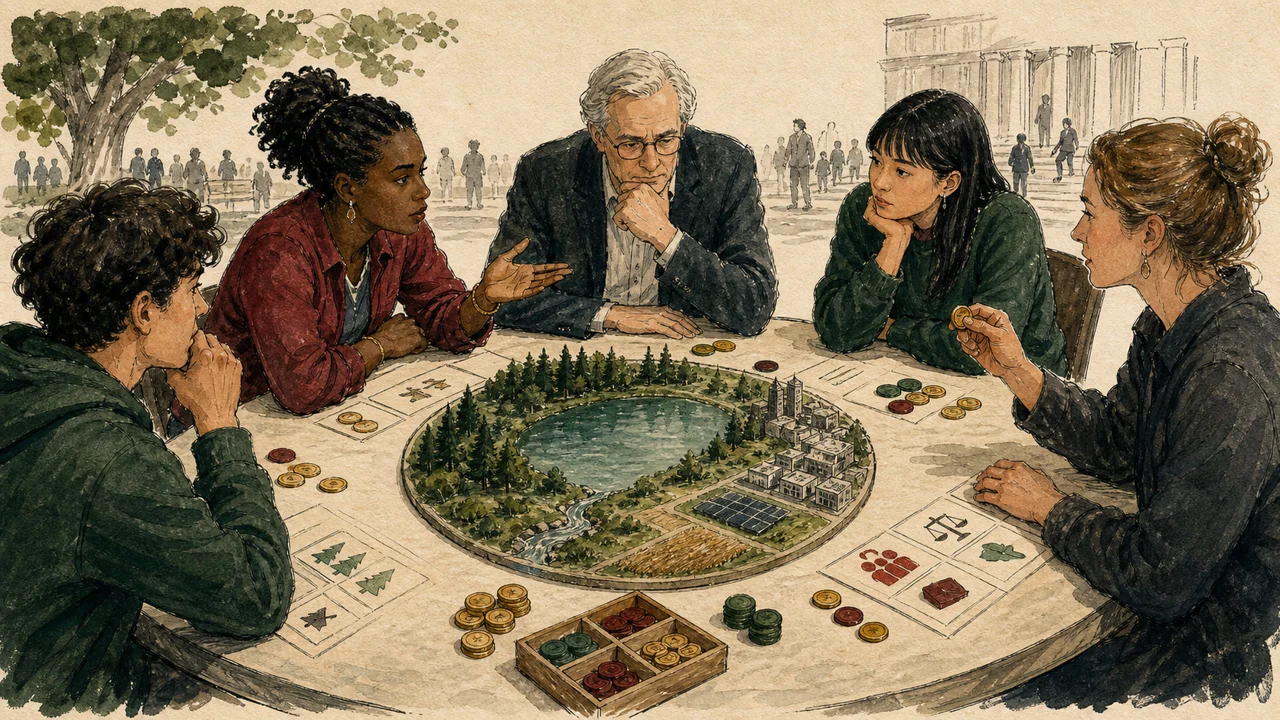
수능 영어에서 “제한된 합리성과 심적 회계” 주제는 용어 암기에서 끝나지 않고 낯선 지문의 논리를 빠르게 잡는 배경지식이 됩니다. 이 수업은 “유용한 분류 휴리스틱은 어떤 순간에 동일한 돈을 다르게 평가하는 인지 편향으로 바뀌는가”이라는 질문에서 출발해 영어 원문, 구조 지도, 수능형 추론 문제를 한 흐름으로 연결합니다.
학습 안내
| 항목 | 내용 |
|---|---|
| 추천 대상 | 고3 · CEFR B2-C1 |
| 배경지식 영역 | 사회·경제 |
| 핵심 질문 | 유용한 분류 휴리스틱은 어떤 순간에 동일한 돈을 다르게 평가하는 인지 편향으로 바뀌는가? |
| 학습 순서 | 개념 미리보기 → 영어 지문 듣기·읽기 → 구조 분석 → 수능형 문제 → 해설 |
| 예상 학습 시간 | 20 min |
Background Preview
제한된 합리성(bounded rationality)은 사람이 복잡한 문제를 완전하게 계산할 인지 능력과 시간이 부족하다는 관점이다. 심적 회계(mental accounting)는 이 복잡성을 줄이기 위해 돈을 용도별 계정으로 나누는 휴리스틱이다. 예산 관리에는 유용하지만 동일한 돈을 다르게 취급하면 더 높은 이자를 부담하는 비합리적 선택도 생긴다.
중심 질문: 유용한 분류 휴리스틱은 어떤 순간에 동일한 돈을 다르게 평가하는 인지 편향으로 바뀌는가?
Read And Listen
[Ⅰ] One of the cognitive biases is called mental accoun– ting. It happens because we mentally put things into categories so that we can deal with the complex world in which we live. It simplifies things. This is very useful in many ways, especially in controlling expenditure against separate budgets, and is commonly used in business and personal finance. However, it can also lead us into making poor decisions because we may be blinded by the way we have defined things. [Ⅱ] This definition of things into categories or acco‒ unts, which is, like many common heuristics, a useful way of dealing with many problems in life, can also lead us into a cognitive bias. In mental accounting, we take things that are identical and split them into two or more mental accounts. The result can be that, although what is in each category is identical, we now regard it differ‒ ently in our minds. This mental accounting is very common and can be particularly pernicious in investing. [Ⅲ] Economist Richard Thaler gives a good example of this process. Imagine that a married couple are saving to buy a holiday home in five years’ time. The $100,000 they have saved so far is accumulating in a savings account at 4.5 per cent interest. Then their old car breaks down and is not repairable, so they need to buy a new one. They finance the $25,000 cost with a loan at 9 percent. When it is presented like this, and we are not personally and emotionally involved in the decision, we can see the apparent stupidity of this decision. [Ⅳ] Clearly, the couple should use $25,000 of their savings, which costs them only 4.5 per cent in interest forgone, and deposit the repayments they intend to make on the car into the savings account. If at this point you find yourself wanting to defend the decision the couple made, you are probably in denial on this cogni‒ tive bias. The reason they do not use their savings is at least partly because they have categorised the money in the savings account as ‘holiday house money’ and the money they intended to apply from income to car repayments as ‘car money.’ However, this is enti‒ rely a mental construct. Clearly each dollar is the same as every other dollar.
Shadowing Focus
- It happens because we mentally put things into categories so that we can deal with the complex world in which we live.
- However, it can also lead us into making poor decisions because we may be blinded by the way we have defined things.
- In mental accounting, we take things that are identical and split them into two or more mental accounts.
- This mental accounting is very common and can be particularly pernicious in investing.
- Clearly each dollar is the same as every other dollar.
Structure Map
핵심 구조
| 요소 | 내용 |
|---|---|
| Topic | 심적 회계의 유용성과 의사 결정 왜곡 |
| Thesis | 돈의 용도별 분류는 복잡성을 줄이지만 동일한 가치를 다르게 보게 해 나쁜 결정을 낳을 수 있다. |
| Evidence | 부부는 4.5% 저축을 유지하면서 9% 자동차 대출을 받아 이자 차이만큼 손해를 본다. |
| Contrast | 예산 통제라는 실용적 장점과 투자·대출 판단의 유해한 편향이 대조된다. |
| Concession | 분류 자체는 생활 문제를 다루는 유용한 휴리스틱일 수 있다. |
| Conclusion | “별장 돈”과 “자동차 돈”은 정신적 구성일 뿐 모든 달러의 경제적 가치는 같다. |
문단별 수사 기능
- [Ⅰ] 개념과 양면성: 범주화의 효용을 인정한 뒤 판단 오류 가능성을 제시한다.
- [Ⅱ] 메커니즘: 동일한 대상을 여러 심적 계정으로 나누어 다르게 평가한다고 설명한다.
- [Ⅲ] 사례: 저축 금리보다 높은 자동차 대출을 선택한 부부를 제시한다.
- [Ⅳ] 처방과 결론: 저축을 쓰는 대안을 계산하고 계정 구분이 정신적 구성임을 밝힌다.
B2-C1 어휘와 구문
- cognitive bias: 인지 편향
- heuristic: 휴리스틱, 간편 추론법
- pernicious: 유해한
- interest forgone: 포기한 이자 수익
- in denial: 부정하는 상태인
- mental construct: 정신적으로 구성한 개념
- Although A, B: A를 인정하면서도 B를 중심 주장으로 제시하는 양보 구조다.
- The more A, the more B: A의 변화에 따라 B가 함께 변하는 비례 관계를 나타낸다.
CSAT Challenge
1. 빈칸 추론
다음 글의 빈칸에 들어갈 말로 가장 적절한 것을 고르시오.
In mental accounting, we take things that are identical and ( ).
- calculate their total value once
- remove every budget category
- split them into two or more mental accounts
- always borrow at the lowest rate
- treat savings and debt as interchangeable
2. 문장 삽입
주어진 문장이 들어가기에 가장 적절한 곳을 고르시오.
However, this is entirely a mental construct.
The couple protects its low-interest savings. ( ① ) It labels those savings “holiday house money.” ( ② ) It separately labels future income “car money.” ( ③ ) Economically, the labels do not change the dollars themselves. ( ④ ) Clearly each dollar is the same as every other dollar. ( ⑤ )
- ①
- ②
- ③
- ④
- ⑤
3. 함축 의미 추론
밑줄 친 “we may be blinded by the way we have defined things”가 의미하는 바로 가장 적절한 것을 고르시오.
- 분류가 복잡한 세계의 모든 정보를 보여 준다.
- 우리가 만든 범주가 동일한 경제적 가치를 다르게 보게 할 수 있다.
- 예산 항목은 언제나 최적의 재무 결정을 보장한다.
- 사람은 돈의 출처와 용도를 전혀 구분하지 않는다.
- 높은 이자율은 낮은 이자율보다 항상 유리하다.
Answer Lab
정답과 해설 보기
1. 빈칸 추론: 정답 ③
근거: 지문의 핵심 인과와 결론을 그대로 완성하는 선택지는 3번이다. 빈칸 앞뒤의 논리 표지와 돈의 용도별 분류는 복잡성을 줄이지만 동일한 가치를 다르게 보게 해 나쁜 결정을 낳을 수 있다.라는 중심 주장을 함께 보존한다.
오답 분석: ①·②는 지문에 없는 조건을 더하거나 논리 방향을 바꾼다. ④·⑤는 핵심 개념의 효과를 과장하거나 반대로 서술한다.
교사 설명: 빈칸은 개별 사례보다 필자가 일반화한 문장을 우선 확인한다. 선택지가 원문의 주체, 방향, 강도를 모두 유지하는지 검토해야 한다.
2. 문장 삽입: 정답 ③
근거: 주어진 문장은 앞 내용의 결과를 받아 다음 설명으로 전환한다. 3 위치에서만 앞 문장의 정보가 이미 마련되고 뒤 문장의 지시 대상과 논리 흐름이 자연스럽게 이어진다.
오답 분석: 앞쪽 위치들은 필요한 배경이나 대조 항이 아직 제시되지 않았다. 뒤쪽 위치들은 원인과 결과 또는 일반화와 사례 사이의 결속을 끊는다.
교사 설명: 접속 표현뿐 아니라 문단의 수사 단계인 설정 → 근거 → 해석을 확인하면 위치를 안정적으로 결정할 수 있다.
3. 함축 의미 추론: 정답 ②
근거: 표현의 직전·직후 설명을 바꾸어 말하면 2번과 같다. 이는 돈의 용도별 분류는 복잡성을 줄이지만 동일한 가치를 다르게 보게 해 나쁜 결정을 낳을 수 있다.
오답 분석: 나머지 선택지는 행위의 방향을 뒤집거나, 지문이 제한적으로 말한 현상을 언제나 성립하는 절대 명제로 바꾼다.
교사 설명: 함축 의미는 표현 자체의 사전적 뜻보다 문맥에서 맡은 기능을 묻는다. 같은 단락의 사례와 결론에 동시에 들어맞는 해석을 고른다.
Knowledge Links
관련 주제
- 전망이론, 손실회피와 넛지 | Prospect Theory, Loss Aversion, and Nudges: 참조점과 손실 평가가 선택을 왜곡하는 방식을 연결한다.
- 지위 소비와 사회적 비교 | Status Consumption and Social Comparison: 경제적 가치 외의 심리적 범주가 소비를 바꾸는 현상을 비교한다.
- 공정성, 호혜성과 협력 게임 | Fairness, Reciprocity, and Cooperation Games: 표준 합리성의 예측과 실제 선택의 차이를 확장한다.
이전 주제: 지위 소비와 사회적 비교 | Status Consumption and Social Comparison
다음 주제: 전망이론, 손실회피와 넛지 | Prospect Theory, Loss Aversion, and Nudges
자주 묻는 질문
“제한된 합리성과 심적 회계” 주제는 수능 영어에서 어떻게 활용되나요?
“유용한 분류 휴리스틱은 어떤 순간에 동일한 돈을 다르게 평가하는 인지 편향으로 바뀌는가”에 답할 때는 원인과 결과, 대조, 사례, 함축 의미 속에서 제한된 합리성과 심적 회계의 논리를 따라가야 합니다. 개념명보다 제한된 합리성과 심적 회계 글의 필자가 어떤 근거로 결론에 도달하는지 표시하세요.
Bounded Rationality and Mental Accounting 지문은 어떤 순서로 공부하면 좋나요?
먼저 “유용한 분류 휴리스틱은 어떤 순간에 동일한 돈을 다르게 평가하는 인지 편향으로 바뀌는가”이라는 중심 질문을 확인하고 영어 지문을 소리 내어 읽습니다. 그다음 제한된 합리성과 심적 회계 구조 지도를 가리고 Topic, Thesis, Evidence를 직접 적은 뒤 수능형 문제와 해설로 추론이 맞았는지 확인하세요.