
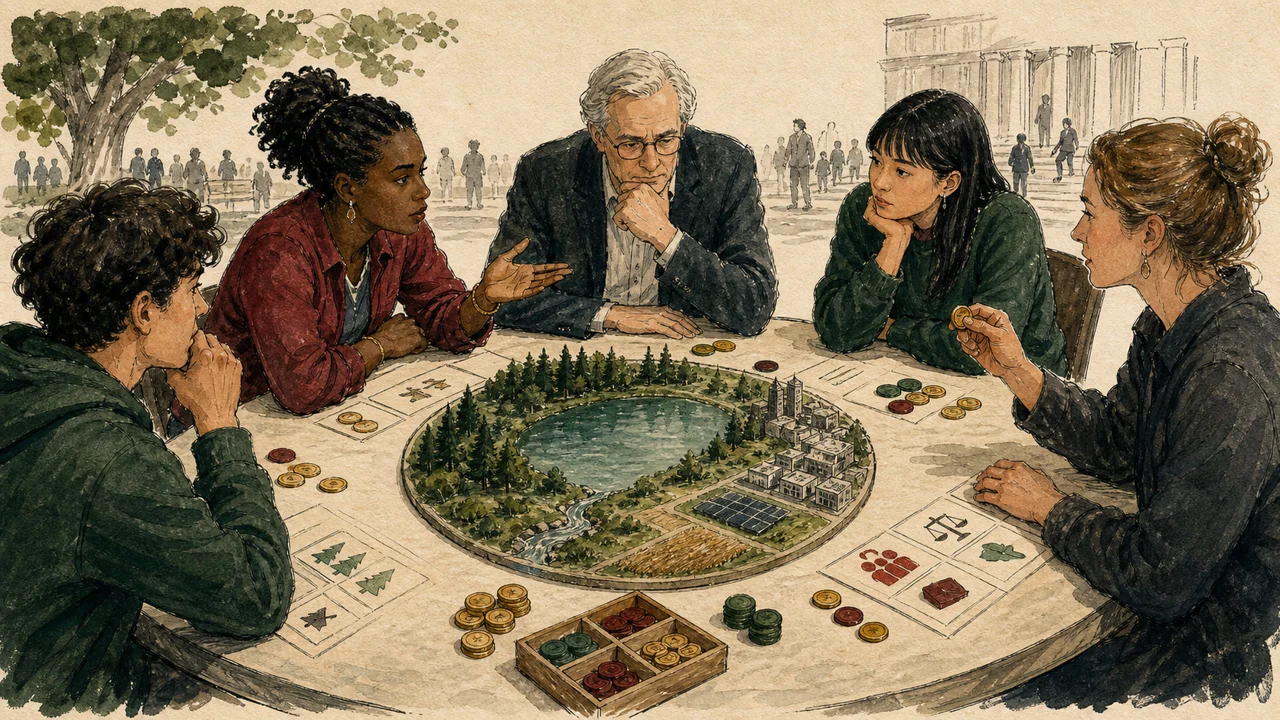
수능 영어에서 “집단사고와 집단극화” 주제는 용어 암기에서 끝나지 않고 낯선 지문의 논리를 빠르게 잡는 배경지식이 됩니다. 이 수업은 “집단의 결속과 합의 압력은 어떤 조건에서 이견을 침묵시키고 현실 검토가 불완전한 결정을 낳는가”이라는 질문에서 출발해 영어 원문, 구조 지도, 수능형 추론 문제를 한 흐름으로 연결합니다.
학습 안내
| 항목 | 내용 |
|---|---|
| 추천 대상 | 고3 · CEFR B2-C1 |
| 배경지식 영역 | 사회·경제 |
| 핵심 질문 | 집단의 결속과 합의 압력은 어떤 조건에서 이견을 침묵시키고 현실 검토가 불완전한 결정을 낳는가? |
| 학습 순서 | 개념 미리보기 → 영어 지문 듣기·읽기 → 구조 분석 → 수능형 문제 → 해설 |
| 예상 학습 시간 | 20 min |
Background Preview
집단사고(groupthink)는 결속력이 높은 집단이 합의를 서두르며 반대 증거를 충분히 검토하지 않는 현상이다. 집단극화(group polarization)는 토론 뒤 구성원의 기존 성향이 더 극단적으로 이동하는 현상이다. 둘은 다르지만, 비슷한 의견을 가진 구성원과 이견 억제가 집단 판단을 악화한다는 공통점을 갖는다.
중심 질문: 집단의 결속과 합의 압력은 어떤 조건에서 이견을 침묵시키고 현실 검토가 불완전한 결정을 낳는가?
Read And Listen
[Ⅰ] Often when a group of people must make a decision on some important issue, there is a great pressure to come to an agreement quickly and avoid dissent. In 1972, Irving Janis identified a phenomenon he called groupthink, a phenomenon strongly related to this pressure. Janis pointed to several important events in United States history that illustrate the dangers that groupthink poses to effective decision making. As one such example, Janis cited the United States’ misguided invasion of Cuba in 1961, an event which came to be known as the Bay of Pigs invasion. [Ⅱ] Prior to the invasion, President John F. Kennedy brought together several advisers who were to help him make the decision about whether or not to invade Cuba. The belief among the advisers was that the invasion would trigger a revolution among Cuban citizens, which would ultimately lead to the ouster of Cuban leader Fidel Castro. The meetings between President Kennedy and his advisers were lengthy and detailed, but the pressures imposed by groupthink led the leaders to ignore many important details that would have alerted them to the inevitable failure of the proposed invasion. [Ⅲ] According to Janis, several conditions of group decision makings are likely to promote groupthink. First, groupthink is likely when a group is high in cohesiveness. Cohesiveness refers to the degree to which group members identify with the group and feel close to the other members. Second, groupthink is likely when the group has a single strong leader, and the group members are homogenous ― that is, similar to each other and having similar views on the issue at hand. It is under these conditions, and if a group is under pressure to come to a decision involving stressful circumstances, that groupthink is most likely to surface. [Ⅳ] Groupthink often results in poor decision making. Because the group members share similar views, are subject to (or subordinate to) a strong leader whose perspective is often consistent with that of the members, and identify strongly with the group as a whole, the decisions reached are often unrealistic. By extension, actions based on such decisions are likely to fail. [Ⅴ] The absence of dissent within the group may instill in members the perception that agreement would be widespread outside the group as well. As the perception of agreement grows stronger, individual members become less likely to express doubts about a proposed course of action, further increasing the perception that agreement is unanimous and enhances the group’s sense of certainty. When a decision is ultimately reached, it is likely to reflect an incomplete evaluation of options and risks.
Shadowing Focus
- Often when a group of people must make a decision on some important issue, there is a great pressure to come to an agreement quickly and avoid dissent.
- Janis pointed to several important events in United States history that illustrate the dangers that groupthink poses to effective decision making.
- The meetings between President Kennedy and his advisers were lengthy and detailed, but the pressures imposed by groupthink led the leaders to ignore many important details that would have alerted them to the inevitable failure of the proposed invasion.
- Cohesiveness refers to the degree to which group members identify with the group and feel close to the other members.
- By extension, actions based on such decisions are likely to fail.
Structure Map
핵심 구조
| 요소 | 내용 |
|---|---|
| Topic | 집단사고의 조건과 의사 결정 실패 |
| Thesis | 강한 지도자, 높은 결속, 동질성, 시간 압박이 결합하면 집단은 중요한 반대 증거를 무시한다. |
| Evidence | 피그만 침공 자문단은 길고 상세한 회의에도 실패를 예고한 정보를 놓쳤다. |
| Contrast | 회의의 형식적 상세함과 실제 대안·위험 검토의 불완전성이 대조된다. |
| Concession | 집단 구성원의 견해가 비슷하다는 사실 자체가 언제나 오류를 뜻하지는 않지만 스트레스와 지도자 압력이 위험을 키운다. |
| Conclusion | 이견 부재는 합의가 보편적이라는 착각을 강화해 비현실적 결정을 낳는다. |
문단별 수사 기능
- [Ⅰ] 개념과 사례: 합의 압력과 집단사고를 정의하고 피그만 침공을 제시한다.
- [Ⅱ] 실패 과정: 자문단이 중요한 세부 정보를 무시한 과정을 설명한다.
- [Ⅲ] 조건 분석: 결속력, 강한 지도자, 동질성, 스트레스를 원인으로 정리한다.
- [Ⅳ]-[Ⅴ] 결과와 순환: 비현실적 결정과 이견 부재가 서로 강화되는 과정을 결론으로 제시한다.
B2-C1 어휘와 구문
- dissent: 반대 의견
- misguided: 잘못 판단된
- ouster: 축출
- cohesiveness: 응집성, 결속력
- homogenous: 동질적인
- unanimous: 만장일치의
- Although A, B: A를 인정하면서도 B를 중심 주장으로 제시하는 양보 구조다.
- The more A, the more B: A의 변화에 따라 B가 함께 변하는 비례 관계를 나타낸다.
CSAT Challenge
1. 빈칸 추론
다음 글의 빈칸에 들어갈 말로 가장 적절한 것을 고르시오.
The pressures imposed by groupthink led the leaders to ( ).
- invite more outside critics
- delay every possible decision
- ignore details that signaled likely failure
- reduce the group’s cohesiveness
- replace agreement with independent voting
2. 문장 삽입
주어진 문장이 들어가기에 가장 적절한 곳을 고르시오.
According to Janis, several conditions of group decision makings are likely to promote groupthink.
The Bay of Pigs meetings were lengthy and detailed. ( ① ) Nevertheless, the advisers ignored warning signs. ( ② ) High cohesiveness is one such condition. ( ③ ) A strong leader and homogenous membership add further pressure. ( ④ ) Stressful circumstances make these pressures still stronger. ( ⑤ )
- ①
- ②
- ③
- ④
- ⑤
3. 함축 의미 추론
밑줄 친 “the perception that agreement is unanimous”가 의미하는 바로 가장 적절한 것을 고르시오.
- 모든 대안을 독립적으로 검증했다는 객관적 결론
- 침묵을 실제 전원 동의로 잘못 해석한 상태
- 외부 집단도 반대한다는 명백한 증거
- 지도자가 결정을 포기했다는 신호
- 구성원의 견해가 토론 후 다양해진 결과
Answer Lab
정답과 해설 보기
1. 빈칸 추론: 정답 ③
근거: 지문의 핵심 인과와 결론을 그대로 완성하는 선택지는 3번이다. 빈칸 앞뒤의 논리 표지와 강한 지도자, 높은 결속, 동질성, 시간 압박이 결합하면 집단은 중요한 반대 증거를 무시한다.라는 중심 주장을 함께 보존한다.
오답 분석: ①·②는 지문에 없는 조건을 더하거나 논리 방향을 바꾼다. ④·⑤는 핵심 개념의 효과를 과장하거나 반대로 서술한다.
교사 설명: 빈칸은 개별 사례보다 필자가 일반화한 문장을 우선 확인한다. 선택지가 원문의 주체, 방향, 강도를 모두 유지하는지 검토해야 한다.
2. 문장 삽입: 정답 ②
근거: 주어진 문장은 앞 내용의 결과를 받아 다음 설명으로 전환한다. 2 위치에서만 앞 문장의 정보가 이미 마련되고 뒤 문장의 지시 대상과 논리 흐름이 자연스럽게 이어진다.
오답 분석: 앞쪽 위치들은 필요한 배경이나 대조 항이 아직 제시되지 않았다. 뒤쪽 위치들은 원인과 결과 또는 일반화와 사례 사이의 결속을 끊는다.
교사 설명: 접속 표현뿐 아니라 문단의 수사 단계인 설정 → 근거 → 해석을 확인하면 위치를 안정적으로 결정할 수 있다.
3. 함축 의미 추론: 정답 ②
근거: 표현의 직전·직후 설명을 바꾸어 말하면 2번과 같다. 이는 강한 지도자, 높은 결속, 동질성, 시간 압박이 결합하면 집단은 중요한 반대 증거를 무시한다.
오답 분석: 나머지 선택지는 행위의 방향을 뒤집거나, 지문이 제한적으로 말한 현상을 언제나 성립하는 절대 명제로 바꾼다.
교사 설명: 함축 의미는 표현 자체의 사전적 뜻보다 문맥에서 맡은 기능을 묻는다. 같은 단락의 사례와 결론에 동시에 들어맞는 해석을 고른다.
Knowledge Links
관련 주제
- 동조, 사회적 증거와 권위 | Conformity, Social Proof, and Authority: 다수와 지도자의 압력이 독립 판단을 약화하는 과정을 연결한다.
- 방관자 효과와 다원적 무지 | Bystander Effect and Pluralistic Ignorance: 침묵을 동의나 안전의 신호로 오해하는 순환을 비교한다.
- 확증편향과 인지부조화 | Confirmation Bias and Cognitive Dissonance: 초기 견해를 지지하는 정보만 선택하는 인지 기제를 확장한다.
이전 주제: 약한 연결과 사회자본 | Weak Ties and Social Capital
다음 주제: 지위 소비와 사회적 비교 | Status Consumption and Social Comparison
자주 묻는 질문
“집단사고와 집단극화” 주제는 수능 영어에서 어떻게 활용되나요?
“집단의 결속과 합의 압력은 어떤 조건에서 이견을 침묵시키고 현실 검토가 불완전한 결정을 낳는가”에 답할 때는 원인과 결과, 대조, 사례, 함축 의미 속에서 집단사고와 집단극화의 논리를 따라가야 합니다. 개념명보다 집단사고와 집단극화 글의 필자가 어떤 근거로 결론에 도달하는지 표시하세요.
Groupthink and Group Polarization 지문은 어떤 순서로 공부하면 좋나요?
먼저 “집단의 결속과 합의 압력은 어떤 조건에서 이견을 침묵시키고 현실 검토가 불완전한 결정을 낳는가”이라는 중심 질문을 확인하고 영어 지문을 소리 내어 읽습니다. 그다음 집단사고와 집단극화 구조 지도를 가리고 Topic, Thesis, Evidence를 직접 적은 뒤 수능형 문제와 해설로 추론이 맞았는지 확인하세요.