
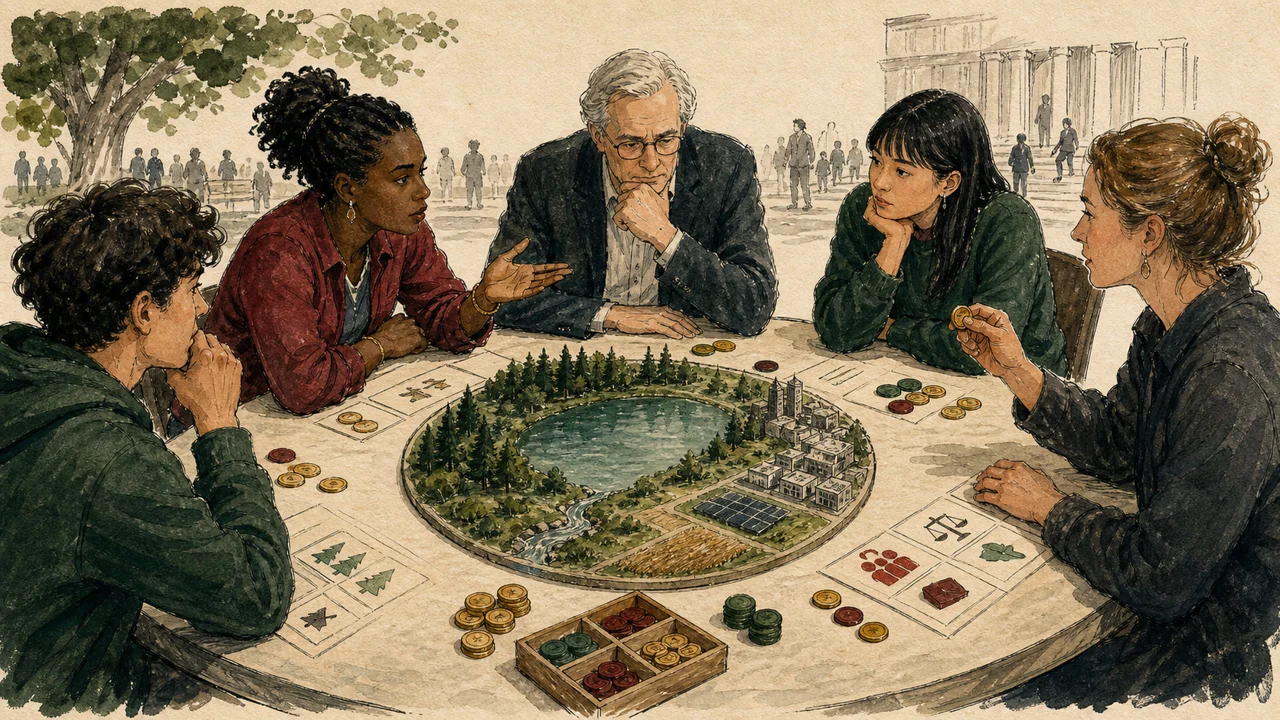
수능 영어에서 “전망이론, 손실회피와 넛지” 주제는 용어 암기에서 끝나지 않고 낯선 지문의 논리를 빠르게 잡는 배경지식이 됩니다. 이 수업은 “손실의 심리적 가중치는 왜 현재 상태를 고수하게 만들며, 기본값은 이 관성을 어떻게 행동 변화의 장치로 사용하는가”이라는 질문에서 출발해 영어 원문, 구조 지도, 수능형 추론 문제를 한 흐름으로 연결합니다.
학습 안내
| 항목 | 내용 |
|---|---|
| 추천 대상 | 고3 · CEFR B2-C1 |
| 배경지식 영역 | 사회·경제 |
| 핵심 질문 | 손실의 심리적 가중치는 왜 현재 상태를 고수하게 만들며, 기본값은 이 관성을 어떻게 행동 변화의 장치로 사용하는가? |
| 학습 순서 | 개념 미리보기 → 영어 지문 듣기·읽기 → 구조 분석 → 수능형 문제 → 해설 |
| 예상 학습 시간 | 20 min |
Background Preview
전망이론은 사람이 절대적 부보다 기준점에서의 이익과 손실을 평가한다고 본다. 같은 크기라면 손실의 고통이 이익의 기쁨보다 큰 손실회피(loss aversion)가 나타난다. 이 비대칭성은 현재 보유물을 놓지 않으려는 관성과 기본값 효과를 만들며, 선택 구조는 이를 이용해 강제 없이 행동을 바꾸는 넛지(nudge)가 될 수 있다.
중심 질문: 손실의 심리적 가중치는 왜 현재 상태를 고수하게 만들며, 기본값은 이 관성을 어떻게 행동 변화의 장치로 사용하는가?
출처: Nudge: Improving Decisions About Health, Wealth, and Happiness — Richard H. Thaler, Cass R. Sunstein
Read And Listen
Gains and Losses People hate losses (and their Automatic Systems can get pretty emotional about them). Roughly speaking, losing something makes you twice as miserable as gaining the same thing makes you happy. In more technical language, people are “loss averse.” How do we know this? Consider a simple experiment.13 Half the students in a class are given coffee mugs with the insignia of their home university embossed on it. The students who do not get a mug are asked to examine their neighbor’s mugs. Then mug owners are invited to sell their mugs and nonowners are invited to buy them. They do so by answering the question “At each of the following prices, indicate whether you would be willing to (give up your mug/buy a mug).” The results show that those with mugs demand roughly twice as much to give up their mugs as others are willing to pay to get one. Thousands of mugs have been used in dozens of replications of this experiment, but the results are nearly always the same. Once I have a mug, I don’t want to give it up. But if I don’t have one, I don’t feel an urgent need to buy one. What this means is that people do not assign specific values to objects. When they have to give something up, they are hurt more than they are pleased if they acquire the very same thing. It is also possible to measure loss aversion with gambles. Suppose I ask
34 HUMANS AND ECONS you whether you want to make a bet. Heads you win $X, tails you lose $100. How much does X have to be for you to take the bet? For most people, the answer to this question is somewhere around $200. This implies that the prospect of winning $200 just offsets the prospect of losing $100. Loss aversion helps produce inertia, meaning a strong desire to stick with your current holdings. If you are reluctant to give up what you have because you do not want to incur losses, then you will turn down trades you might have otherwise made. In another experiment, half the students in a class received coffee mugs (of course) and half got large chocolate bars. The mugs and the chocolate cost about the same, and in pretests students were as likely to choose one as the other. Yet when offered the opportunity to switch from a mug to a candy bar or vice versa, only one in ten switched. As we will see, loss aversion operates as a kind of cognitive nudge, pressing us not to make changes, even when changes are very much in our interests.
Shadowing Focus
- People hate losses (and their Automatic Systems can get pretty emotional about them).
- Roughly speaking, losing something makes you twice as miserable as gaining the same thing makes you happy.
- Thousands of mugs have been used in dozens of replications of this experiment, but the results are nearly always the same.
- When they have to give something up, they are hurt more than they are pleased if they acquire the very same thing.
- This implies that the prospect of winning $200 just offsets the prospect of losing $100.
Structure Map
핵심 구조
| 요소 | 내용 |
|---|---|
| Topic | 손실회피가 보유 효과와 변화 회피를 만드는 과정 |
| Thesis | 사람은 같은 대상도 소유한 뒤 포기할 때 더 크게 평가하며 이 손실회피가 관성과 인지적 넛지를 만든다. |
| Evidence | 머그 소유자는 구매 희망자보다 약 두 배의 가격을 요구했고, 머그와 초콜릿 교환에서는 열 명 중 한 명만 바꾸었다. |
| Contrast | 동일 물건을 얻는 기쁨과 포기하는 고통의 크기가 비대칭적이다. |
| Concession | 대상의 객관적 가치가 바뀐 것이 아니라 기준점과 소유 상태가 평가를 바꾼다. |
| Conclusion | 손실회피는 이익이 되는 변화조차 거부하게 만들어 기본 상태를 강한 선택 신호로 만든다. |
문단별 수사 기능
- 개념 정의: 손실의 고통이 같은 이익의 기쁨보다 크다고 설명한다.
- 보유 효과 실험: 머그 판매자와 구매자의 평가 차이를 제시한다.
- 도박의 측정: 100달러 손실을 상쇄하려면 약 200달러 이익이 필요함을 보인다.
- 관성과 넛지: 교환 회피를 통해 손실회피가 현상 유지 압력으로 작용한다고 결론짓는다.
B2-C1 어휘와 구문
- loss averse: 손실을 회피하는
- embossed: 양각으로 새겨진
- replication: 반복 검증
- offset: 상쇄하다
- inertia: 관성
- current holdings: 현재 보유 자산
- Although A, B: A를 인정하면서도 B를 중심 주장으로 제시하는 양보 구조다.
- The more A, the more B: A의 변화에 따라 B가 함께 변하는 비례 관계를 나타낸다.
CSAT Challenge
1. 빈칸 추론
다음 글의 빈칸에 들어갈 말로 가장 적절한 것을 고르시오.
The prospect of winning $200 just ( ) the prospect of losing $100.
- conceals
- doubles
- offsets
- forbids
- randomizes
2. 문장 삽입
주어진 문장이 들어가기에 가장 적절한 곳을 고르시오.
Loss aversion helps produce inertia, meaning a strong desire to stick with your current holdings.
The gamble shows that a gain must be much larger than an equal loss. ( ① ) This asymmetry affects choices beyond explicit bets. ( ② ) People become reluctant to give up what they already possess. ( ③ ) In the mug-and-chocolate experiment, only one in ten switched. ( ④ ) Loss aversion therefore presses people not to change. ( ⑤ )
- ①
- ②
- ③
- ④
- ⑤
3. 함축 의미 추론
밑줄 친 “loss aversion operates as a kind of cognitive nudge”가 의미하는 바로 가장 적절한 것을 고르시오.
- 손실 가능성에 대한 민감성이 현재 선택을 유지하도록 압박한다.
- 법률이 모든 교환을 금지하여 행동을 강제한다.
- 사람은 손실과 이익을 언제나 같은 크기로 평가한다.
- 새로운 선택은 현재 보유물보다 자동으로 더 매력적이다.
- 금전적 보상만이 선택 구조를 바꿀 수 있다.
Answer Lab
정답과 해설 보기
1. 빈칸 추론: 정답 ③
근거: 지문의 핵심 인과와 결론을 그대로 완성하는 선택지는 3번이다. 빈칸 앞뒤의 논리 표지와 사람은 같은 대상도 소유한 뒤 포기할 때 더 크게 평가하며 이 손실회피가 관성과 인지적 넛지를 만든다.라는 중심 주장을 함께 보존한다.
오답 분석: ①·②는 지문에 없는 조건을 더하거나 논리 방향을 바꾼다. ④·⑤는 핵심 개념의 효과를 과장하거나 반대로 서술한다.
교사 설명: 빈칸은 개별 사례보다 필자가 일반화한 문장을 우선 확인한다. 선택지가 원문의 주체, 방향, 강도를 모두 유지하는지 검토해야 한다.
2. 문장 삽입: 정답 ①
근거: 주어진 문장은 앞 내용의 결과를 받아 다음 설명으로 전환한다. 1 위치에서만 앞 문장의 정보가 이미 마련되고 뒤 문장의 지시 대상과 논리 흐름이 자연스럽게 이어진다.
오답 분석: 앞쪽 위치들은 필요한 배경이나 대조 항이 아직 제시되지 않았다. 뒤쪽 위치들은 원인과 결과 또는 일반화와 사례 사이의 결속을 끊는다.
교사 설명: 접속 표현뿐 아니라 문단의 수사 단계인 설정 → 근거 → 해석을 확인하면 위치를 안정적으로 결정할 수 있다.
3. 함축 의미 추론: 정답 ①
근거: 표현의 직전·직후 설명을 바꾸어 말하면 1번과 같다. 이는 사람은 같은 대상도 소유한 뒤 포기할 때 더 크게 평가하며 이 손실회피가 관성과 인지적 넛지를 만든다.
오답 분석: 나머지 선택지는 행위의 방향을 뒤집거나, 지문이 제한적으로 말한 현상을 언제나 성립하는 절대 명제로 바꾼다.
교사 설명: 함축 의미는 표현 자체의 사전적 뜻보다 문맥에서 맡은 기능을 묻는다. 같은 단락의 사례와 결론에 동시에 들어맞는 해석을 고른다.
Knowledge Links
관련 주제
- 제한된 합리성과 심적 회계 | Bounded Rationality and Mental Accounting: 심리적 범주와 기준점이 경제 판단을 바꾸는 방식을 연결한다.
- 공정성, 호혜성과 협력 게임 | Fairness, Reciprocity, and Cooperation Games: 표준 경제 모형과 실제 행동의 차이를 비교한다.
- 지연 만족과 자기통제 | Delay of Gratification and Self-Control: 즉각적 감정과 장기적 선택의 긴장을 확장한다.
이전 주제: 제한된 합리성과 심적 회계 | Bounded Rationality and Mental Accounting
다음 주제: 인공지능과 기계 사고 | Artificial Intelligence and Machine Thinking
자주 묻는 질문
“전망이론, 손실회피와 넛지” 주제는 수능 영어에서 어떻게 활용되나요?
“손실의 심리적 가중치는 왜 현재 상태를 고수하게 만들며, 기본값은 이 관성을 어떻게 행동 변화의 장치로 사용하는가”에 답할 때는 원인과 결과, 대조, 사례, 함축 의미 속에서 전망이론, 손실회피와 넛지의 논리를 따라가야 합니다. 개념명보다 전망이론, 손실회피와 넛지 글의 필자가 어떤 근거로 결론에 도달하는지 표시하세요.
Prospect Theory, Loss Aversion, and Nudges 지문은 어떤 순서로 공부하면 좋나요?
먼저 “손실의 심리적 가중치는 왜 현재 상태를 고수하게 만들며, 기본값은 이 관성을 어떻게 행동 변화의 장치로 사용하는가”이라는 중심 질문을 확인하고 영어 지문을 소리 내어 읽습니다. 그다음 전망이론, 손실회피와 넛지 구조 지도를 가리고 Topic, Thesis, Evidence를 직접 적은 뒤 수능형 문제와 해설로 추론이 맞았는지 확인하세요.