
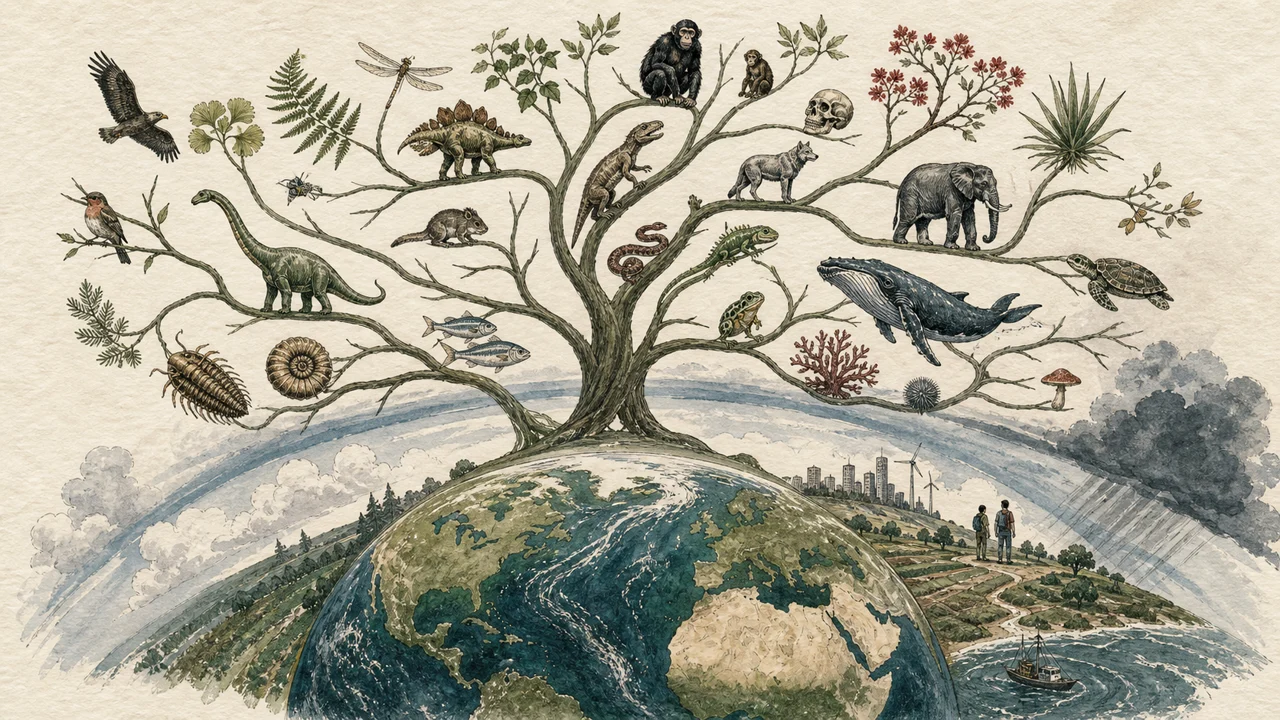
수능 영어에서 “요리 가설과 비싼 조직 가설” 주제는 용어 암기에서 끝나지 않고 낯선 지문의 논리를 빠르게 잡는 배경지식이 됩니다. 이 수업은 “음식을 몸 밖에서 미리 처리하는 기술은 어떻게 인간의 뇌와 소화기관의 진화를 바꾸었는가”이라는 질문에서 출발해 영어 원문, 구조 지도, 수능형 추론 문제를 한 흐름으로 연결합니다.
학습 안내
| 항목 | 내용 |
|---|---|
| 추천 대상 | 고3 · CEFR B2-C1 |
| 배경지식 영역 | 환경·진화 |
| 핵심 질문 | 음식을 몸 밖에서 미리 처리하는 기술은 어떻게 인간의 뇌와 소화기관의 진화를 바꾸었는가? |
| 학습 순서 | 개념 미리보기 → 영어 지문 듣기·읽기 → 구조 분석 → 수능형 문제 → 해설 |
| 예상 학습 시간 | 20 min |
Background Preview
요리 가설은 불을 이용한 조리가 인간 진화의 전환점이었다고 본다. 익힌 음식은 더 적은 씹기와 소화 비용으로 많은 에너지를 제공했고, 비싼 조직 가설의 관점에서는 소화관에 쓰이던 에너지가 큰 뇌로 이동할 여지를 만들었다. 글은 요리를 문화의 상징에서 생물학적 원인으로 다시 읽는다.
중심 질문: 음식을 몸 밖에서 미리 처리하는 기술은 어떻게 인간의 뇌와 소화기관의 진화를 바꾸었는가?
출처: Cooked: A Natural History of Transformation — Michael Pollan
Read And Listen
요리에 대한 문화적 정의가 진화 가설로 전환되고, 에너지 밀도와 소화 비용으로 설명되는 흐름을 따라가자.
[Ⅰ] The idea that cooking is a defining human activity is not a new one. In 1773, the Scottish writer James Boswell, noting that “no beast is a cook,” called Homo sapiens “the cooking animal.” (Though he might have reconsidered that definition had he been able to gaze upon the frozen‒food cases at Walmart.) Fifty years later, in The Physiology of Taste, the French gastronome Jean Anthelme Brillat‒Savarin claimed that cooking made us who we are; by teaching men to use fire, it had “done the most to advance the cause of civilization.” [Ⅱ] More recently, Claude Lévi‒Strauss, writing in The Raw and the Cooked in 1964, reported that many of the world’s cultures entertained a similar view, regarding cooking as the symbolic activity that “establishes the difference between animals and people.” For Levi‒Strauss, cooking was a metaphor for the human transformation of raw nature into cooked culture. But in the years since the publication of The Raw and the Cooked, other anthropolo‒ gists have begun to take quite literally the idea that the invention of cooking might hold the evolutionary key to our humanness. [Ⅲ] A few years ago, a Harvard anthropologist and prima‒ tologist named Richard Wrangham published a fascinating book called Catching Fire, in which he argued that it was the discovery of cooking by our early ancestors ― and not tool making or meat eating or language ― that set us apart from the apes and made us human. According to the “cooking hypothesis,” the advent of cooked food altered the course of human evolution. By providing our forebears with a more energy‒dense and easy‒to‒digest diet, it allows our brains to grow bigger (brains being notorious energy guzzlers) and our guts to shrink. It seems that raw food takes much more time and energy to chew and digest, which is why other primates our size carry around substantially larger digestive tracts and spend many more of their waking hours chewing ― as much as six hours a day.
Shadowing Focus
- Though he might have reconsidered that definition had he been able to gaze upon the frozen‒food cases at Walmart.
- The idea that cooking is a defining human activity is not a new one.
- For Levi‒Strauss, cooking was a metaphor for the human transformation of raw nature into cooked culture.
- According to the “cooking hypothesis,” the advent of cooked food altered the course of human evolution.
- By providing our forebears with a more energy‒dense and easy‒to‒digest diet, it allows our brains to grow bigger (brains being notorious energy guzzlers) and our guts to shrink.
Structure Map
논지 구조
- Topic: 요리가 인간의 신체와 문화를 바꾼 진화적 전환
- Thesis: 조리는 에너지 밀도와 소화 효율을 높여 큰 뇌와 작은 소화관의 진화를 가능하게 했다.
- Contrast: 요리를 문화적 상징으로 보는 해석에서 생물학적 원인으로 보는 해석으로 이동한다.
- Conclusion: 인간다움의 핵심 동인을 도구·언어가 아니라 익힌 음식에서 찾을 수 있다.
문단별 기능
- [Ⅰ] 역사적 관점: 요리가 인간을 규정한다는 오래된 생각을 소개한다.
- [Ⅱ] 해석 전환: 문화적 은유가 진화적 열쇠라는 문자적 가설로 바뀐다.
- [Ⅲ] 인과 설명: 익힌 음식, 큰 뇌, 작은 소화관의 에너지 관계를 설명한다.
B2-C1 어휘와 구문
- defining: 대상을 본질적으로 규정하는
- gastronome: 음식과 미식에 정통한 사람
- forebears: 현생 인류보다 앞선 조상들
- energy-dense: 같은 양에 더 많은 에너지가 든
- digestive tract: 음식물을 분해·흡수하는 소화관
it was A that ...: 요리의 발견을 다른 후보와 대조해 강조한다.had he been able to:if he had been able to의 도치형 가정법이다.
CSAT Challenge
1. 빈칸 추론
다음 빈칸에 들어갈 말로 가장 적절한 것을 고르시오.
Cooking may have supported larger brains because it made food ________.
- harder to digest
- less energy-dense
- easier to digest and richer in usable energy
- dependent on six hours of chewing
- identical to the diet of other primates
2. 글의 순서
주어진 글 다음에 이어질 글의 순서로 가장 적절한 것을 고르시오.
Cooking was long treated as a symbol of civilization.
(A) Wrangham then proposed that cooked food changed human evolution itself. (B) The extra usable energy could support a larger brain and a smaller gut. (C) Anthropologists began to take the old cultural claim literally.
- (A) - (B) - (C)
- (A) - (C) - (B)
- (B) - (A) - (C)
- (C) - (A) - (B)
- (C) - (B) - (A)
3. 함축 의미
다음 표현이 함축하는 바로 가장 적절한 것을 고르시오.
brains being notorious energy guzzlers
- 큰 뇌는 유지에 많은 에너지가 필요하다.
- 뇌는 소화관보다 에너지를 전혀 쓰지 않는다.
- 익힌 음식은 인류의 에너지 섭취를 줄였다.
- 인간의 뇌 크기는 음식과 무관하다.
- 날음식은 항상 조리식보다 흡수가 빠르다.
Answer Lab
정답 및 해설 보기
1. 빈칸 추론
정답: 3번
- 근거: 익힌 음식은 에너지 밀도가 높고 소화가 쉬워 큰 뇌에 에너지를 제공한다.
- 오답 분석: 1·2·4번은 본문의 소화 효율과 반대이며, 5번은 인간과 다른 영장류의 차이를 지운다.
- 교사 해설: 원인인 조리와 결과인 뇌 확대 사이를 연결하는 에너지 효율을 찾는다.
2. 글의 순서
정답: 4번(C-A-B)
- 근거: 문화적 주장에 대한 문자적 재해석(C), 가설 제시(A), 생리적 메커니즘(B) 순서다.
- 오답 분석: A를 먼저 두면 관점 전환이 생략되고, B를 앞세우면 가설보다 결과가 먼저 나온다.
- 교사 해설:
then과 인과적 결과가 배열을 고정한다.
3. 함축 의미
정답: 1번
- 근거:
energy guzzlers는 뇌가 많은 대사 에너지를 소비한다는 비유다. - 오답 분석: 2번은 에너지 비용을 부정하고, 3·5번은 조리 효과를 뒤집는다. 4번은 글의 중심 인과를 부정한다.
- 교사 해설: 비유의 대상은 뇌의 높은 에너지 요구량이다.
Knowledge Links
관련 주제
- 직립보행과 인간 진화 (
environment-evolution-09) - 인간 계통을 바꾼 다른 신체 적응을 연결한다. - 텔로미어, 산화 스트레스와 노화 (
science-technology-08) - 신체의 에너지 사용과 생물학적 비용을 확장한다. - 단백질 합성과 생물학적 공장 은유 (
science-technology-09) - 영양과 신체 조직 형성의 분자적 배경을 연결한다.
시리즈 이동
- 이전: 혈연선택과 상호적 이타주의 (
environment-evolution-07) - 다음: 직립보행과 인간 진화 (
environment-evolution-09)
자주 묻는 질문
“요리 가설과 비싼 조직 가설” 주제는 수능 영어에서 어떻게 활용되나요?
“음식을 몸 밖에서 미리 처리하는 기술은 어떻게 인간의 뇌와 소화기관의 진화를 바꾸었는가”에 답할 때는 원인과 결과, 대조, 사례, 함축 의미 속에서 요리 가설과 비싼 조직 가설의 논리를 따라가야 합니다. 개념명보다 요리 가설과 비싼 조직 가설 글의 필자가 어떤 근거로 결론에 도달하는지 표시하세요.
Cooking Hypothesis and Expensive Tissue Hypothesis 지문은 어떤 순서로 공부하면 좋나요?
먼저 “음식을 몸 밖에서 미리 처리하는 기술은 어떻게 인간의 뇌와 소화기관의 진화를 바꾸었는가”이라는 중심 질문을 확인하고 영어 지문을 소리 내어 읽습니다. 그다음 요리 가설과 비싼 조직 가설 구조 지도를 가리고 Topic, Thesis, Evidence를 직접 적은 뒤 수능형 문제와 해설로 추론이 맞았는지 확인하세요.