수능 영어에서 “혈연선택과 상호적 이타주의” 주제는 용어 암기에서 끝나지 않고 낯선 지문의 논리를 빠르게 잡는 배경지식이 됩니다. 이 수업은 “직접적인 손해를 감수하는 협력이 어떻게 진화적으로 유지될 수 있는가”이라는 질문에서 출발해 영어 원문, 구조 지도, 수능형 추론 문제를 한 흐름으로 연결합니다.
학습 안내
| 항목 | 내용 |
|---|---|
| 추천 대상 | 고3 · CEFR B2-C1 |
| 배경지식 영역 | 환경·진화 |
| 핵심 질문 | 직접적인 손해를 감수하는 협력이 어떻게 진화적으로 유지될 수 있는가? |
| 학습 순서 | 개념 미리보기 → 영어 지문 듣기·읽기 → 구조 분석 → 수능형 문제 → 해설 |
| 예상 학습 시간 | 20 min |
Background Preview
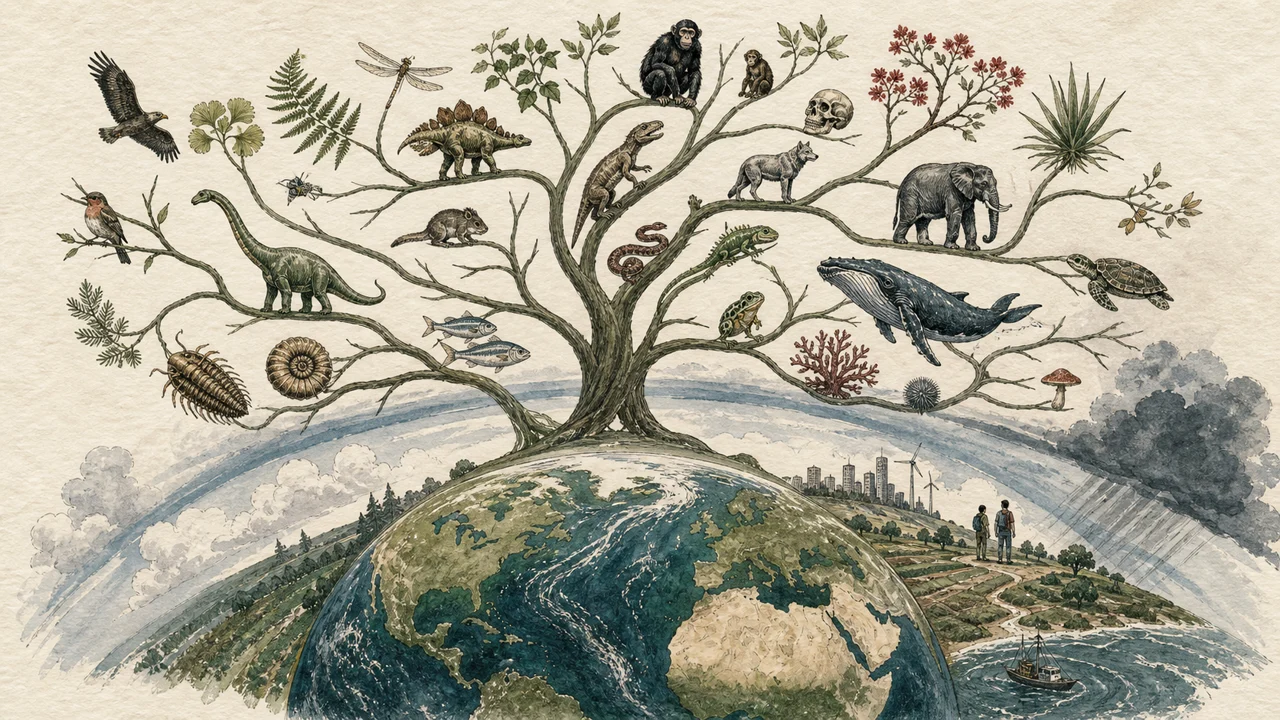
동물의 이타 행동은 ‘이기적 유전자’와 모순처럼 보이지만, 진화생물학은 두 가지 대표 메커니즘을 제시한다. 혈연선택은 가까운 친족을 도와 공유 유전자의 전달 가능성을 높이는 설명이고, 상호적 이타주의는 지금의 도움을 미래의 보답과 교환하는 설명이다. 후자는 상대를 기억하고 다시 알아보는 인지 능력까지 요구한다.
중심 질문: 직접적인 손해를 감수하는 협력이 어떻게 진화적으로 유지될 수 있는가?
출처: Second Nature: The Inner Lives of Animals — Jonathan Balcombe
Read And Listen
협력 사례의 범위, 혈연선택, 비혈연 개체 사이의 상호적 이타주의 순으로 설명이 분화되는 흐름을 읽어 보자.
The Synergy of Cooperation [Ⅰ] Cooperation occurs when two or more individuals behave in a coordinated fashion to the gain of the parti– cipants. Nature is replete with cooperating individuals, both members of the same and of different species. Ants defend aphids, who provide them with sweet droplets of honeydew from their rear ends. Cleaner fish pluck parasites from predatory fish that could swallow them in an instant, but do not do so because a colleague is better than a cutthroat. Juvenile birds remain at the nest to help in the rearing of their parents’ subsequent broods. [Ⅱ] How selfish genes translate into unselfish organisms has been a central question of modern biology. In the “survival of the fittest” view of the world, individuals are merely gene–making machines, and every behavior is ultimately in the individual’s self–interest. Scientists have developed two widely accepted explanations for the cooperative and selfless behavior commonly shown by animals (human included). The first theory, known as kin selection, was set forth in a 1964 paper by British evolutionary biologist William Hamilton. By helping close genetic relatives, one is indirectly investing in one’s own genes. The most prominent example is the care and pro– tection of young. Many studies have shown that individuals will sacrifice immediate selfinterests to benefit close relatives. [Ⅲ] But there are myriad examples of animals acting compassionately toward others who are not kin — in some cases they are not even of the same species. That’s where the second theory, reciprocal altruism, comes in. Devel– oped by the American evolutionary biologist Robert Trivers in 1971, reciprocal altruism refers to the exchange of a favor now for the prospects of a returned favor later. Readers should note that reciprocal altruism depends on individuals’ ⒜ doing favors to one another, ⒝ remembering the favor later on, and ⒞ recognizing the individual who did the favor. Reciprocal altruists have minds, and feelings.
Shadowing Focus
- Cooperation occurs when two or more individuals behave in a coordinated fashion to the gain of the parti– cipants.
- How selfish genes translate into unselfish organisms has been a central question of modern biology.
- The first theory, known as kin selection, was set forth in a 1964 paper by British evolutionary biologist William Hamilton.
- By helping close genetic relatives, one is indirectly investing in one’s own genes.
- Reciprocal altruists have minds, and feelings.
Structure Map
논지 구조
- Topic: 동물 협력을 설명하는 혈연선택과 상호적 이타주의
- Thesis: 이타 행동은 친족의 공유 유전자나 미래의 호혜적 보답을 통해 진화적 이익과 연결될 수 있다.
- Examples: 개미와 진딧물, 청소어와 포식어, 부모의 다음 새끼를 돕는 어린 새가 제시된다.
- Contrast: 혈연선택은 유전적 근연성을, 상호적 이타주의는 비혈연 관계의 반복 교환을 설명한다.
- Conclusion: 상호성은 호의를 기억하고 행위자를 식별하는 마음의 능력을 전제한다.
문단별 기능
- [Ⅰ] 현상 제시: 같은 종과 다른 종 사이의 다양한 협력 사례를 열거한다.
- [Ⅱ] 첫 설명: 친족을 돕는 행동을 포괄 적합도의 관점에서 설명한다.
- [Ⅲ] 둘째 설명: 비혈연 협력을 미래 보답의 교환과 인지 조건으로 설명한다.
B2-C1 어휘와 구문
- kin selection: 가까운 친족을 돕는 행동이 공유 유전자의 생존을 높인다는 이론
- reciprocal altruism: 현재의 호의가 미래의 보답 가능성과 교환되는 상호적 이타주의
- self-interest: 행위자 자신의 직접 이익
- compassionately: 타자의 어려움을 헤아리고 돕는 방식으로
- prospects: 미래에 어떤 일이 일어날 가능성
- recognize: 이전에 만난 특정 개체임을 식별하다
By + -ing: 친족을 돕는 행위가 유전자 투자로 이어지는 수단을 제시한다.That’s where ... comes in: 앞 이론이 설명하지 못한 사례에 새 이론이 필요함을 알린다.
CSAT Challenge
1. 빈칸 추론
다음 빈칸에 들어갈 말로 가장 적절한 것을 고르시오.
Unlike kin selection, reciprocal altruism explains cooperation through ________.
- shared ancestry alone
- immediate domination
- expected future return of favors
- inability to recognize partners
- one-time anonymous encounters
2. 글의 순서
주어진 글 다음에 이어질 글의 순서로 가장 적절한 것을 고르시오.
Biologists needed to explain how apparently selfless behavior could evolve.
(A) Yet cooperation also occurs among non-relatives and even across species. (B) Kin selection explains aid to relatives as indirect investment in shared genes. (C) Reciprocal altruism addresses those cases through remembered exchanges of favors.
- (A) - (B) - (C)
- (A) - (C) - (B)
- (B) - (A) - (C)
- (B) - (C) - (A)
- (C) - (A) - (B)
3. 함축 의미
다음 문장이 함축하는 바로 가장 적절한 것을 고르시오.
Reciprocal altruists have minds, and feelings.
- 상호성은 상대와 과거의 호의를 기억하고 평가하는 능력이 필요하다.
- 모든 이타 행동은 유전적 친족 사이에서만 나타난다.
- 감정이 있으면 미래의 보답은 전혀 중요하지 않다.
- 협력 행동은 학습이나 인지와 무관한 자동 반사다.
- 다른 종 사이의 협력은 진화적으로 불가능하다.
Answer Lab
정답 및 해설 보기
1. 빈칸 추론
정답: 3번
- 근거: 상호적 이타주의는 지금의 호의를 나중에 돌아올 호의의 가능성과 교환하는 것이다.
- 오답 분석: 1번은 혈연선택이다. 2번은 협력이 아니라 지배이고, 4번은 상대 인식 조건과 반대다. 5번은 반복 관계와 기억을 불가능하게 한다.
- 교사 해설:
Unlike kin selection이 혈연이 아닌 시간적 상호성의 메커니즘을 요구한다.
2. 글의 순서
정답: 3번(B-A-C)
- 근거: 첫 이론(B)을 제시한 뒤
Yet이 설명의 한계를 드러내고(A),those cases를 둘째 이론(C)이 해결한다. - 오답 분석: A를 먼저 두면 대조 대상이 없다. C가 A보다 먼저 오면
those cases의 선행 내용이 없고, B-C-A는 둘째 이론의 필요성이 뒤늦게 나온다. - 교사 해설: 대조 접속사와 지시 표현을 연결하면 두 이론의 배열이 보인다.
3. 함축 의미
정답: 1번
- 근거: 글은 호의 실행, 나중의 기억, 행위자 인식을 상호적 이타주의의 세 조건으로 제시한다.
- 오답 분석: 2번과 5번은 비혈연·이종 협력 사례를 부정한다. 3번은 미래 보답을 지우고, 4번은 기억과 인식 조건에 반한다.
- 교사 해설:
minds, and feelings는 단순 감상이 아니라 반복적 사회 관계를 처리하는 인지·정서 능력을 압축한다.
Knowledge Links
관련 주제
- 자연선택, 사회진화론과 상호부조 (
environment-evolution-04) - 협력이 진화적 적응이 될 수 있다는 큰 틀을 연결한다. - 공정성, 상호성과 협력 게임 (
society-economics-03) - 상호성을 인간의 판단과 게임 상황에서 비교한다. - 이타주의와 도움 행동 (
society-economics-04) - 도움 행동의 심리·사회적 조건을 확장한다.
시리즈 이동
- 이전: 붉은 여왕 효과와 적응 압력 (
environment-evolution-06) - 다음: 요리 가설과 비싼 조직 가설 (
environment-evolution-08)
자주 묻는 질문
“혈연선택과 상호적 이타주의” 주제는 수능 영어에서 어떻게 활용되나요?
“직접적인 손해를 감수하는 협력이 어떻게 진화적으로 유지될 수 있는가”에 답할 때는 원인과 결과, 대조, 사례, 함축 의미 속에서 혈연선택과 상호적 이타주의의 논리를 따라가야 합니다. 개념명보다 혈연선택과 상호적 이타주의 글의 필자가 어떤 근거로 결론에 도달하는지 표시하세요.
Kin Selection and Reciprocal Altruism 지문은 어떤 순서로 공부하면 좋나요?
먼저 “직접적인 손해를 감수하는 협력이 어떻게 진화적으로 유지될 수 있는가”이라는 중심 질문을 확인하고 영어 지문을 소리 내어 읽습니다. 그다음 혈연선택과 상호적 이타주의 구조 지도를 가리고 Topic, Thesis, Evidence를 직접 적은 뒤 수능형 문제와 해설로 추론이 맞았는지 확인하세요.