Publishing does not end at the button. It ends when the reader-facing book has been checked and the evidence has been archived.
What You Will Produce
- Objective: Distinguish rejection and review states, then plan post-live verification and archive evidence.
- Action: Create a personal release path showing the current state, next evidence, decision owner, and follow-up check.
- Evidence: A release path that connects submitted, live, and complete status to the next verification evidence and archive location.
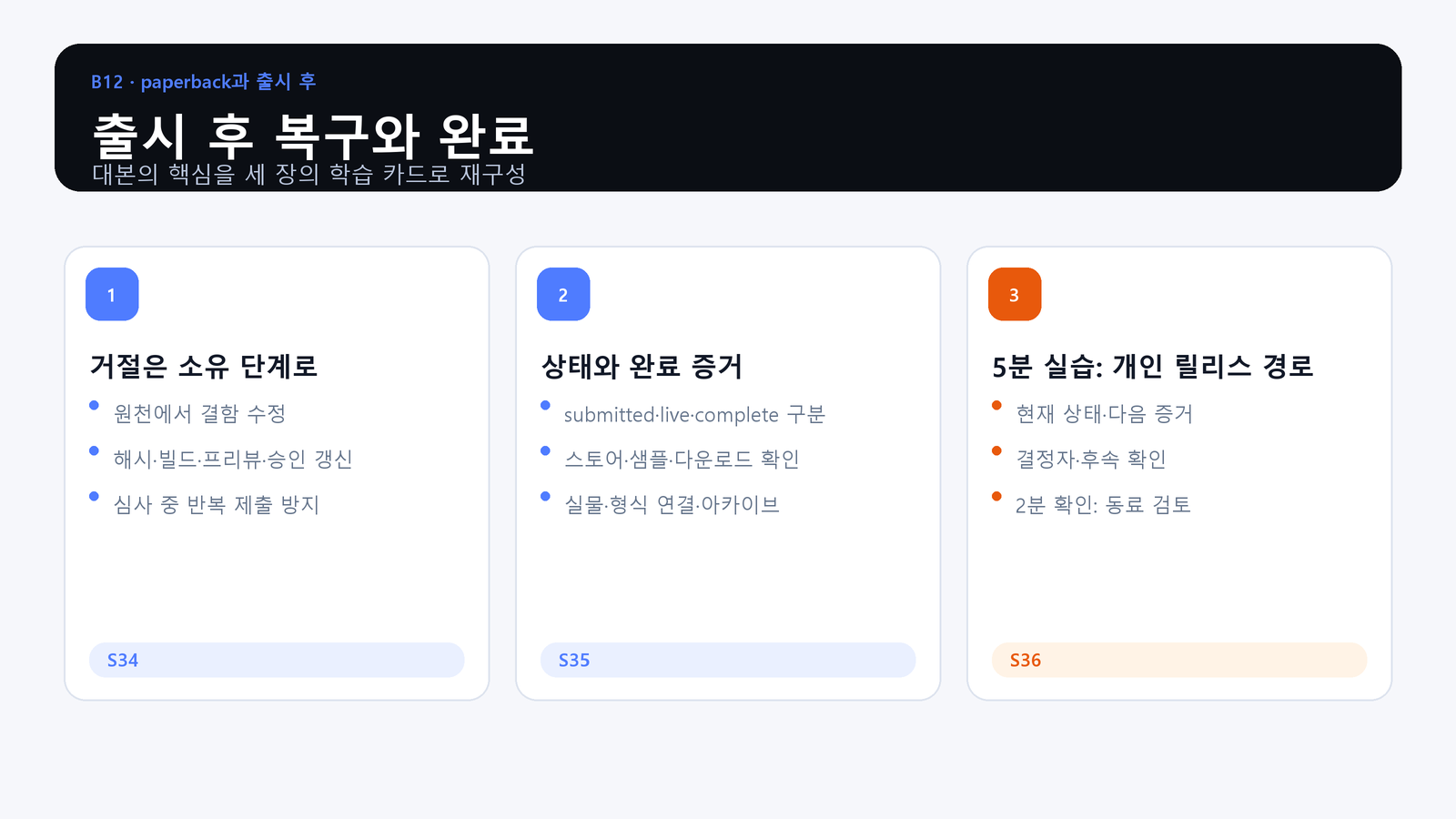
A Rejection Belongs to an Owning Step
Correct the defect at the source or production step that owns it. Renew hashes, builds, previews, and approvals affected by that correction. Do not repeatedly submit while the state is uncertain.
Status and Completion Are Different
Submitted means the format was sent for review. Live means the storefront state has been confirmed. Complete requires the planned storefront, sample, download, format, physical-copy, and archive checks.
Practice: Draw Your Release Path
Record the current state, the next evidence, the decision owner, and the follow-up time. Connect both Kindle and paperback to their own verification and recovery paths.
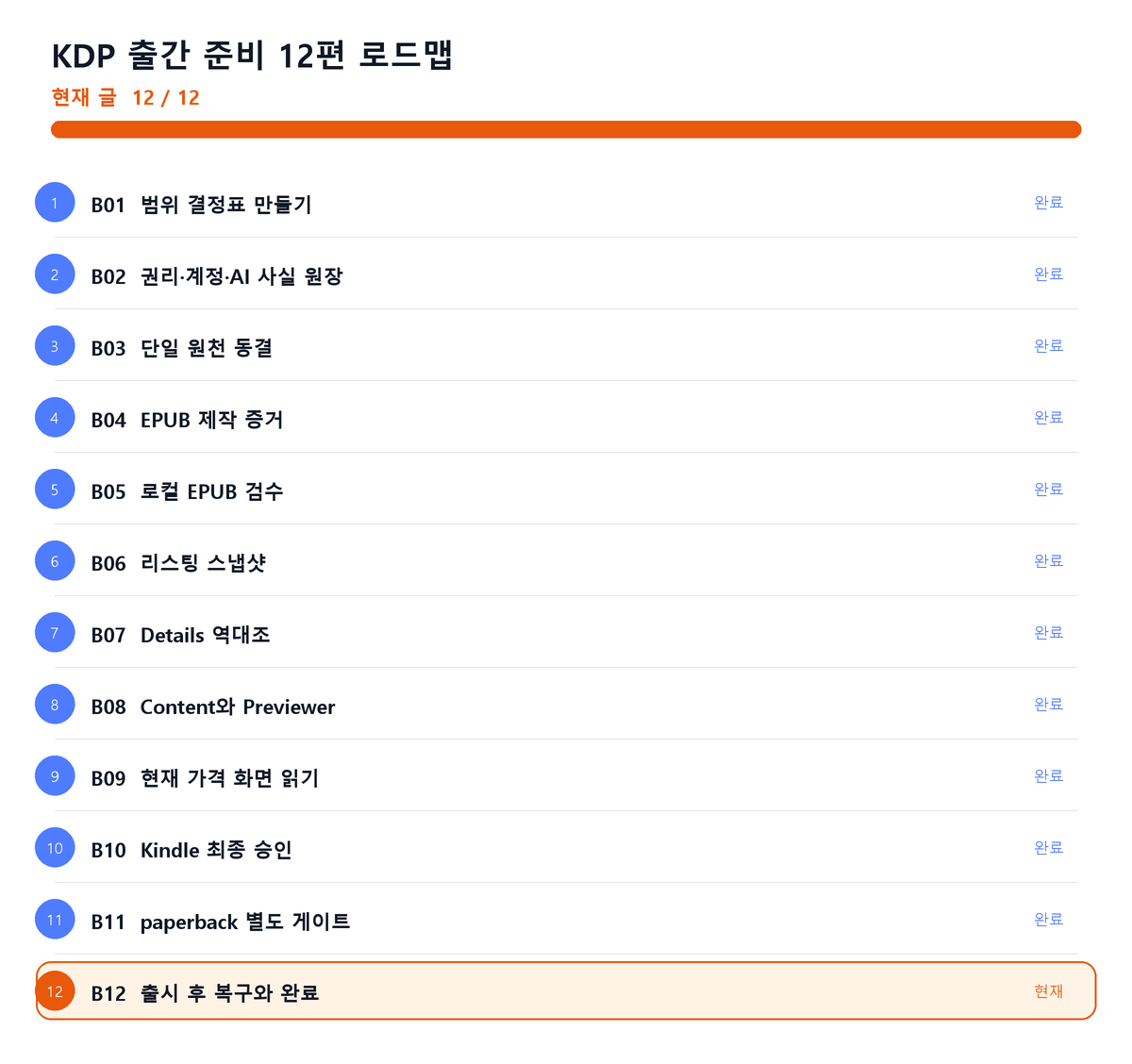
Where This Fits in the Series
Closing Principle
A project is complete only when reader-facing verification and the required archive are complete.
References
This article is for preparation and quality assurance. Never capture or record passwords, cookies, tokens, tax identifiers, bank identifiers, or private manuscript identifiers.
Series Navigation
Previous: KDP Publishing 11: Keep Paperback as a Separate Gate
댓글
GitHub 계정으로 의견을 남길 수 있습니다. 댓글은 GitHub Discussions에 저장됩니다.