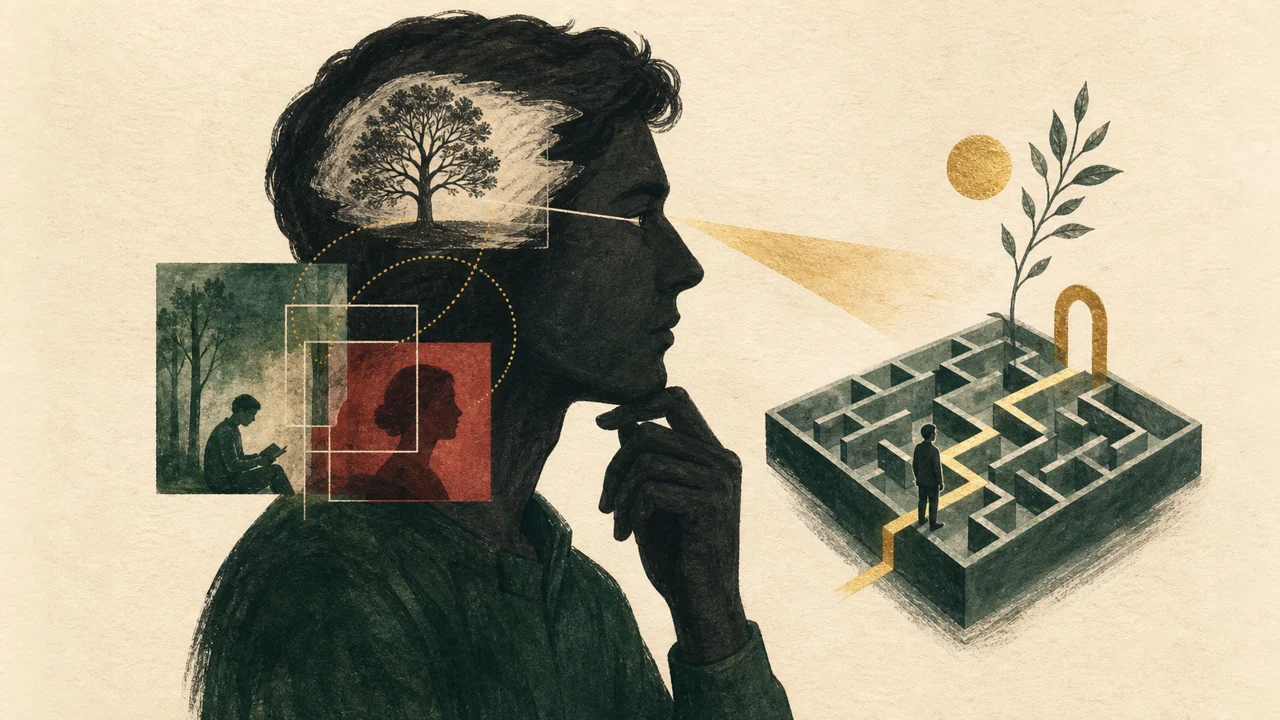
수능 영어에서 “귀인이론과 자기고양 편향” 주제는 용어 암기에서 끝나지 않고 낯선 지문의 논리를 빠르게 잡는 배경지식이 됩니다. 이 수업은 “왜 우리는 타인과 자신의 행동 원인을 서로 다른 기준으로 해석하는가”이라는 질문에서 출발해 영어 원문, 구조 지도, 수능형 추론 문제를 한 흐름으로 연결합니다.
학습 안내
| 항목 | 내용 |
|---|---|
| 추천 대상 | 고3 · CEFR B2-C1 |
| 배경지식 영역 | 심리학 |
| 핵심 질문 | 왜 우리는 타인과 자신의 행동 원인을 서로 다른 기준으로 해석하는가? |
| 학습 순서 | 개념 미리보기 → 영어 지문 듣기·읽기 → 구조 분석 → 수능형 문제 → 해설 |
| 예상 학습 시간 | 20 min |
Background Preview
개념 미리보기
귀인은 행동의 원인을 개인 내부의 성향이나 외부 상황에서 찾는 추론이다. 글은 타인을 볼 때 상황을 과소평가하는 기본적 귀인 오류와, 자신을 볼 때 성공은 능력에 돌리고 실패는 상황 탓으로 돌리는 자기고양 편향을 함께 설명한다.
중심 질문
왜 우리는 타인과 자신의 행동 원인을 서로 다른 기준으로 해석하는가?
Read And Listen
[Ⅰ] An area of social cognition which has been influenced by the cognitive approach is the process by which we interpret the causes of behaviour ― our own, and that of other people. The inferences we make about the causes of behaviour are called attributions, and the model used to explain the interpretations we make is called attribution theory. As Fritz Heider, the founder of attribution theory, said, we are all ‘psychologists,’ in that we all try to make sense out of people’s actions. [Ⅱ] Heider, like Lewin a Gestalt psychologist, suggested that we tend to interpret behaviour in terms of internal (personal) and/or external (situational) factors. For exam– ple, if you see someone frowning, you may decide they are angry, and speculate about the source of their anger. Depending on the circumstances and the information you have, you may attribute it to internal factors, such as the person having a hostile nature, or you may attribute it to something in the external situation, such as the person having received bad news. [Ⅲ] Trying to understand why someone is acting in a particular way can obviously be useful ― assuming our interpretations are accurate. Given that we often have incomplete information, however, errors are also quite possible. As a result, researchers studying attributions have been interested in the types of errors that people make, particularly those that might represent a consistent tendency, or bias. One such error, called the fundamental attribution error, is the tendency to underestimate the importance of situational influences, and overestimate the importance of internal factors in interpreting other people’s behaviour. [Ⅳ] Thus, if we encounter a sales clerk who is unhelpful, we are likely to assume that the person is unfriendly, rather than consider whether the working conditions or other situational factors might be responsible (for example, the person may have sore feet after standing for several hours). Similarly, it has been suggested that people find the results of Milgram’s study of obedience surprising, because it emphasizes that, contrary to our intuitions, situational factors are often more powerful than internal factors. [Ⅴ] The fundamental attribution error suggests there is a basic bias in the way we perceive other people. However, ⇨
attribution theory also applies to the way we interpret our own behaviour. Not surprisingly, there is evidence that errors can also occur in this contexts; one such error identified by researchers is called the self–serving bias. The self–serving bias reflects a desire to see ourselves in the best possible light; in practice, it is expressed as a tendency to attribute our successes to personal factors (that is, our own ability), but blame our failures on situational factors (for example, distraction, lack of time). Thus, if Marie does well on a test, she may say it is because she studied hard, but if she does badly, she may complain that the test was unfair. The end result is a distortion of Marie’s self–image in a favourable way.
Shadowing Focus
- The inferences we make about the causes of behaviour are called attributions, and the model used to explain the interpretations we make is called attribution theory.
- Trying to understand why someone is acting in a particular way can obviously be useful ― assuming our interpretations are accurate.
- The fundamental attribution error suggests there is a basic bias in the way we perceive other people.
- The self–serving bias reflects a desire to see ourselves in the best possible light; in practice, it is expressed as a tendency to attribute our successes to personal factors (that is, our own ability), but blame our failures on situational factors (for example, distraction, lack of time).
- The end result is a distortion of Marie’s self–image in a favourable way.
Structure Map
| 구간 | 수사 기능 | 핵심 내용 |
|---|---|---|
| [Ⅰ]-[Ⅱ] | 개념 정의 | 귀인과 내부·외부 요인의 구분을 소개한다. |
| [Ⅲ] | 오류 설명 | 불완전한 정보가 일관된 귀인 편향을 낳을 수 있음을 보인다. |
| [Ⅳ] | 사례 | 판매원과 밀그램 연구로 상황 요인의 과소평가를 설명한다. |
| [Ⅴ] | 자기 귀인 확장 | 성공과 실패를 비대칭적으로 해석하는 자기고양 편향을 제시한다. |
- Topic: 행동 원인 추론의 체계적 편향
- Thesis: 사람은 타인의 행동에서 상황을 과소평가하고 자신의 결과에서는 자아상을 유리하게 지키는 경향이 있다.
- Evidence: 마리는 성공은 노력, 실패는 불공정한 시험 탓으로 돌린다.
- Contrast: 내부 요인과 외부 요인, 타인 귀인과 자기 귀인이 대비된다.
- Concession: 원인을 추론하는 일 자체는 유용하지만 정보가 불완전할 수 있다.
- Conclusion: 귀인은 객관적 설명이라기보다 관찰자의 편향을 포함할 수 있다.
B2-C1 어휘
attribution: 귀인, 원인 추론situational: 상황적인underestimate: 과소평가하다intuition: 직관distortion: 왜곡
구문 포인트
the process by which: 행동 원인을 해석하는 과정을 관계절로 정의한다.Given that: 정보가 불완전하다는 배경 조건을 제시한다.rather than consider: 실제로 고려하지 않은 대안 설명을 대비한다.attribute A to B: 결과 A를 원인 B의 탓으로 돌리다.
CSAT Challenge
1. 빈칸 추론
The self-serving bias allows people to protect a favorable self-image by ______.
- crediting success internally while explaining failure situationally
- treating every outcome as a product of luck
- judging their own behavior more harshly than others’
- ignoring personal ability in all successful outcomes
- applying one neutral standard to every explanation
2. 문장 삽입
다음 문장이 들어갈 위치로 가장 적절한 곳은? Attribution errors are not limited to judgments about other people.
- 귀인의 정의를 제시하기 전
- 내부·외부 요인을 구분하기 전
- 기본적 귀인 오류를 설명하는 도중
- [Ⅴ]의
However뒤, 자기 행동의 귀인으로 전환하기 전 - 마리의 시험 사례 뒤
3. 함축 의미
see ourselves in the best possible light가 뜻하는 바로 가장 적절한 것은?
- 자신을 가장 정확한 자료로 평가하다
- 자신의 행동을 타인의 시선으로만 해석하다
- 자신에게 유리한 방식으로 결과를 해석하다
- 모든 실패를 개인 능력 부족으로 인정하다
- 상황 요인을 언제나 배제하다
Answer Lab
정답과 해설 보기
1. 빈칸 추론
정답: 1
근거: 성공은 능력 같은 개인 요인, 실패는 시간 부족 같은 상황 요인에 돌린다고 정의한다.
오답 분석: 2는 모든 결과를 외부화하고, 3은 방향이 반대이며, 4는 성공 귀인을 지우고, 5는 편향의 비대칭을 부정한다.
교사 설명: successes ... personal과 failures ... situational의 평행 구조를 찾는다.
2. 문장 삽입
정답: 4
근거: 앞에서는 타인 지각의 기본적 귀인 오류를, 뒤에서는 our own behaviour의 자기고양 편향을 다룬다.
오답 분석: 1과 2는 아직 타인 오류가 나오기 전이다. 3은 개념 설명을 끊는다. 5는 자기 귀인 설명이 이미 끝난 뒤이다.
교사 설명: not limited to는 앞 주제를 요약하면서 새 주제로 전환하는 연결 장치이다.
3. 함축 의미
정답: 3
근거: 자기고양 편향은 성공과 실패를 자아상에 유리하게 다르게 설명한다.
오답 분석: 1은 편향을 객관성으로 바꾼다. 2는 타인 시선에 한정한다. 4와 5는 실제 귀인 방향과 반대이다.
교사 설명: best possible light는 문자적 빛이 아니라 호의적 관점이라는 관용 표현이다.
Knowledge Links
- 학습된 무기력과 통제감 (
psychology-01): 실패 원인 해석이 이후 행동을 제한하는 방식을 연결한다. - 자기효능감과 회복탄력성 (
psychology-04): 능력에 대한 판단이 동기와 수행에 미치는 영향을 본다. - 기억과 스키마 (
psychology-08): 기존 인지 틀이 판단을 조직하고 편향시키는 과정을 확장한다.
시리즈 이동
- 이전: 만족 지연과 자기통제
- 다음: 기억과 스키마
자주 묻는 질문
“귀인이론과 자기고양 편향” 주제는 수능 영어에서 어떻게 활용되나요?
“왜 우리는 타인과 자신의 행동 원인을 서로 다른 기준으로 해석하는가”에 답할 때는 원인과 결과, 대조, 사례, 함축 의미 속에서 귀인이론과 자기고양 편향의 논리를 따라가야 합니다. 개념명보다 귀인이론과 자기고양 편향 글의 필자가 어떤 근거로 결론에 도달하는지 표시하세요.
Attribution Theory and Self-Serving Bias 지문은 어떤 순서로 공부하면 좋나요?
먼저 “왜 우리는 타인과 자신의 행동 원인을 서로 다른 기준으로 해석하는가”이라는 중심 질문을 확인하고 영어 지문을 소리 내어 읽습니다. 그다음 귀인이론과 자기고양 편향 구조 지도를 가리고 Topic, Thesis, Evidence를 직접 적은 뒤 수능형 문제와 해설로 추론이 맞았는지 확인하세요.