
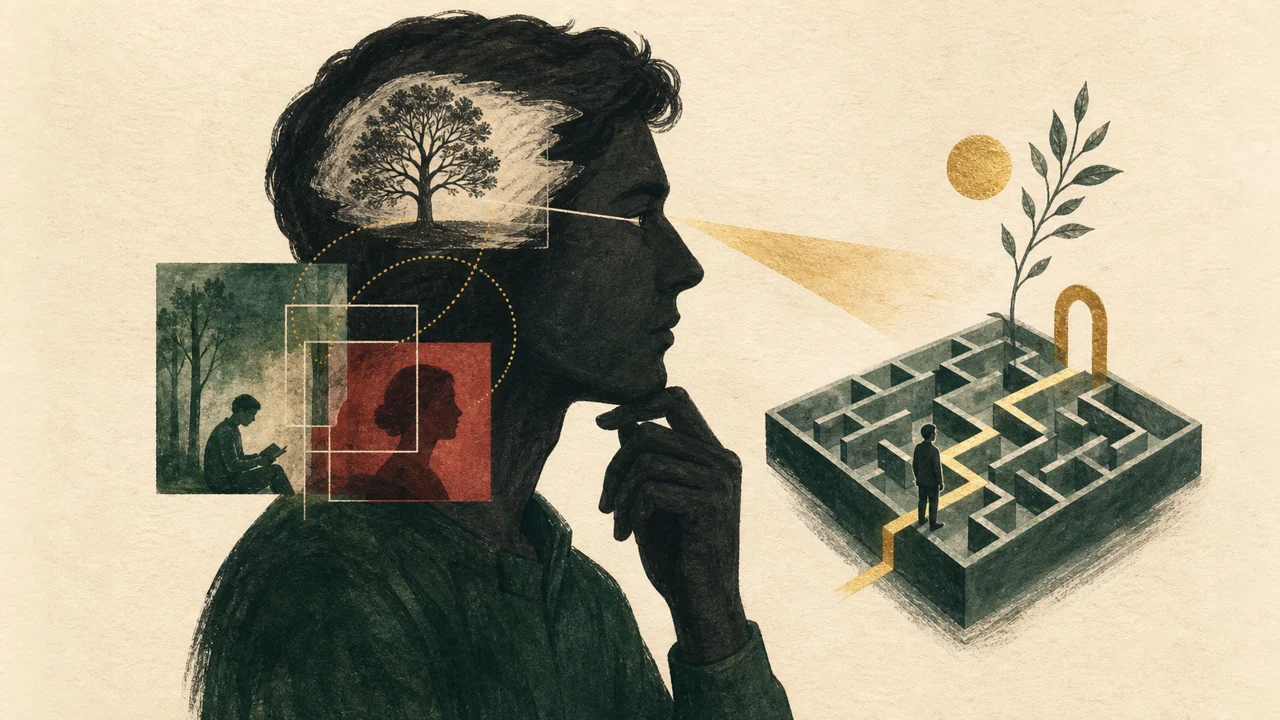
수능 영어에서 “기억과 스키마” 주제는 용어 암기에서 끝나지 않고 낯선 지문의 논리를 빠르게 잡는 배경지식이 됩니다. 이 수업은 “스키마는 세계를 이해하게 하면서 동시에 판단과 행동을 어떻게 이끄는가”이라는 질문에서 출발해 영어 원문, 구조 지도, 수능형 추론 문제를 한 흐름으로 연결합니다.
학습 안내
| 항목 | 내용 |
|---|---|
| 추천 대상 | 고3 · CEFR B2-C1 |
| 배경지식 영역 | 심리학 |
| 핵심 질문 | 스키마는 세계를 이해하게 하면서 동시에 판단과 행동을 어떻게 이끄는가? |
| 학습 순서 | 개념 미리보기 → 영어 지문 듣기·읽기 → 구조 분석 → 수능형 문제 → 해설 |
| 예상 학습 시간 | 20 min |
Background Preview
개념 미리보기
스키마는 경험과 기억을 조직해 대상을 빠르게 해석하게 하는 인지적 틀이다. 글은 피아제의 보존 개념부터 식당과 사회적 상황의 스키마, 노인 관련 단어가 걷는 속도에 영향을 준 점화 실험까지 확장한다.
중심 질문
스키마는 세계를 이해하게 하면서 동시에 판단과 행동을 어떻게 이끄는가?
Read And Listen
[Ⅰ] Since the 1920s, psychologists have made much use of the schema concept. The term refers to cognitive frameworks, templates, or rule systems that we apply to the world to make sense of it. The progenitor of the modern concept of schema is the Swiss developmental psychologist Jean Piaget. For example, Piaget described the child’s schema for the “conservation of matter” — the rule that the amount of matter is the same regardless of the size and shape of the container that holds it. If you pour water from a tall, narrow container into a short, wide one and ask a young child whether the amount of water is more, less, or the same, the child is likely to say either “more” or “less.” An older child will recognize that the amount of water is the same. Piaget also identified more abstract rule systems such as the child’s schema for probability. [Ⅱ] We have schemas for virtually every kind of thing we encounter. There are schemas for “house,” “family,” “civil war,” “insect,” “fast food restaurant” (lots of plastic, bright primary colors, many children, so-so food), and “fancy restaurant” (quiet, elegant decor, expensive, high likelihood the food will be quite good). We depend on schemas for construal of the objects we encounter and the nature of the situation we’re in. [Ⅲ] Schemas affect our behavior as well as our judgments. The social psychologist John Bargh and his coworkers had college students make grammatical sentences out of a scramble of words, for example, “Red Fred light a ran.” For some participants, a number of the words, — “Florida,” “old,” “gray,” “wise” — were intended to call up the stereotype of an elderly person. Other participants made sentences from words that didn’t play into the stereotype of the elderly. After completing the unscrambling task, the experimenters dismissed the participants. The experimenters measured how rapidly the participants walked away from the lab. [Ⅳ] Participants who had been exposed to the words suggestive of elderly people walked more slowly toward the elevator than unprimed participants. If you’re going to interact with an old person — the schema for which one version of the sentence-unscrambling task calls up — it’s best not to run around and act too animated. (That is, if you have positive attitudes toward the elderly. Students who are not favorably disposed toward the elderly actually walk faster after the elderly prime!) Without our schemas, life would be, in William James’s famous words, “a blooming, buzzing confusion.” If we lacked schemas
for weddings, funerals, or visits to the doctor — with their tacit rules for how to behave in each of these situations — we would constantly be making a mess of things.
Shadowing Focus
- The term refers to cognitive frameworks, templates, or rule systems that we apply to the world to make sense of it.
- The progenitor of the modern concept of schema is the Swiss developmental psychologist Jean Piaget.
- An older child will recognize that the amount of water is the same.
- We have schemas for virtually every kind of thing we encounter.
- Schemas affect our behavior as well as our judgments.
Structure Map
| 구간 | 수사 기능 | 핵심 내용 |
|---|---|---|
| [Ⅰ] | 정의와 발달 사례 | 스키마를 정의하고 피아제의 보존 개념으로 설명한다. |
| [Ⅱ] | 범위 확장 | 일상 대상과 상황마다 스키마가 있음을 보인다. |
| [Ⅲ] | 행동 효과 실험 | 노인 관련 단어가 걷기 행동을 점화하는 절차를 제시한다. |
| [Ⅳ] | 결과와 종합 | 점화 효과와 사회적 상황의 암묵적 규칙을 연결한다. |
- Topic: 인지적 틀이 지각, 판단, 행동을 조직하는 방식
- Thesis: 스키마는 복잡한 세계를 해석하게 하지만 활성화된 틀은 행동에도 영향을 준다.
- Evidence: 노인 관련 단어에 노출된 참가자들은 엘리베이터까지 더 천천히 걸었다.
- Contrast: 점화 집단과 비점화 집단의 걷기 속도가 대비된다.
- Concession: 점화 효과는 노인에 대한 태도에 따라 다른 방향으로 나타날 수 있다.
- Conclusion: 스키마가 없다면 상황별 규칙을 매번 새로 구성해야 한다.
B2-C1 어휘
framework: 인지적 틀construal: 해석 방식scramble: 뒤섞인 것unprimed: 사전 점화를 받지 않은tacit: 암묵적인
구문 포인트
regardless of: 용기의 모양과 무관한 보존 원리를 표현한다.as well as: 판단뿐 아니라 행동도 영향 범위에 포함한다.who had been exposed to: 실험 처치를 받은 집단을 관계절로 한정한다.If we lacked ...: 스키마가 없을 때의 반사실 결과를 제시한다.
CSAT Challenge
1. 빈칸 추론
Schemas are useful because they ______, although they can also prime behavior.
- organize experience into interpretable patterns and rules
- preserve every detail of an event without selection
- prevent prior knowledge from affecting judgment
- operate only in formal scientific reasoning
- eliminate differences in social attitudes
2. 글의 순서
(A) 노인 관련 단어 점화 실험과 행동 결과를 제시한다. (B) 스키마를 인지적 틀로 정의하고 발달 사례를 든다. (C) 스키마의 범위를 다양한 일상 대상과 상황으로 넓힌다.
- (A) - (B) - (C)
- (B) - (A) - (C)
- (B) - (C) - (A)
- (C) - (A) - (B)
- (C) - (B) - (A)
3. 함축 의미
a blooming, buzzing confusion이 문맥에서 뜻하는 바로 가장 적절한 것은?
- 스키마 없이 경험이 조직되지 않은 혼란스러운 상태
- 감각 정보가 완전히 사라진 고요한 상태
- 사회적 규칙을 의도적으로 거부하는 태도
- 노인 점화가 항상 빠른 행동을 만드는 현상
- 기억이 객관적 사실만을 저장하는 체계
Answer Lab
정답과 해설 보기
1. 빈칸 추론
정답: 1
근거: 글은 스키마를 세계를 이해하기 위한 틀과 규칙 체계로 정의한다.
오답 분석: 2는 선택적 조직 기능을 부정한다. 3은 스키마의 영향과 반대이다. 4는 일상 사례를 무시하고, 5는 태도에 따른 차이를 지운다.
교사 설명: useful because에는 마지막 문단의 혼란 방지 기능이 들어간다.
2. 글의 순서
정답: 3
근거: 정의와 발달(B), 일상 범위(C), 행동 실험(A)으로 구체성과 적용 범위가 확장된다.
오답 분석: 1과 2는 실험을 개념 범위보다 앞세우고, 4와 5는 정의를 뒤로 미룬다.
교사 설명: 개념 지문은 정의 → 예시 확장 → 실험적 효과의 흐름을 따른다.
3. 함축 의미
정답: 1
근거: 뒤의 결혼식, 장례식, 진료 상황은 스키마가 행동 규칙을 조직함을 보여 준다.
오답 분석: 2는 감각 상실이 아니다. 3은 의도적 거부와 무관하다. 4와 5는 실험과 기억을 과도하게 좁힌다.
교사 설명: 비유 뒤에 제시된 구체적 상황이 표현의 의미를 풀어 준다.
Knowledge Links
- 귀인이론과 자기고양 편향 (
psychology-07): 기존 인지 틀이 원인 판단을 편향시키는 방식을 연결한다. - 부주의 맹시와 변화 맹시 (
psychology-09): 선택적 주의가 무엇을 보거나 놓치게 하는지 살핀다. - 본성과 양육의 상호작용 (
psychology-03): 경험으로 형성된 인지 구조와 발달을 확장한다.
시리즈 이동
- 이전: 귀인이론과 자기고양 편향
- 다음: 부주의 맹시와 변화 맹시
자주 묻는 질문
“기억과 스키마” 주제는 수능 영어에서 어떻게 활용되나요?
“스키마는 세계를 이해하게 하면서 동시에 판단과 행동을 어떻게 이끄는가”에 답할 때는 원인과 결과, 대조, 사례, 함축 의미 속에서 기억과 스키마의 논리를 따라가야 합니다. 개념명보다 기억과 스키마 글의 필자가 어떤 근거로 결론에 도달하는지 표시하세요.
Memory and Schema 지문은 어떤 순서로 공부하면 좋나요?
먼저 “스키마는 세계를 이해하게 하면서 동시에 판단과 행동을 어떻게 이끄는가”이라는 중심 질문을 확인하고 영어 지문을 소리 내어 읽습니다. 그다음 기억과 스키마 구조 지도를 가리고 Topic, Thesis, Evidence를 직접 적은 뒤 수능형 문제와 해설로 추론이 맞았는지 확인하세요.